
Supreme Court: Corporations Could “Buy” The Electoral Process

NEWS JUNKIE POST
Sep 9, 2009 at 5:49 pm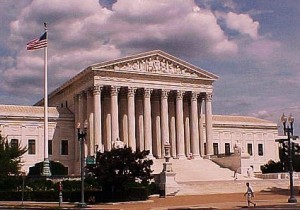 Today, the Supreme Court met to hear an argument that could literally transform American politics. The Supreme Court could reverse almost 100 years of legal precedents that have blocked corporate spending on candidates running for Federal elections. If the law is changed, corporate money would flood the electoral process and give even more power to the lobbyists working on the behalf of special interests.
The case originated from a 90 minutes film about Hillary Clinton made in 2008 during the campaign. The film was blocked from running on cable TV in 2008 by the Federal Election Commission. The FEC and a lower Court ruled, at the time, that the film amounted to a political ad, and because it was financed by corporate money, federal law banned it from broadcast just before the elections.
Former Solicitor General Ted Olson was arguing the case on behalf of the plaintiff. At the core of his opening statement, Ted Olson stated that corporations have the right to free speech during elections just as individuals do.
“Mr. Olson are you taking the position that there is no difference in the 1ST Amendment of an individual? A corporation, after all, is not endowed by its creator with inalienable rights. So is there any distinction that Congress could draw between corporations and natural human beings for purpose of campaign finance?” said Justice Ginsburg in response to Olson’s opening statement.
Justice Breyer later pointed out that if corporations win the right to spend unlimited and undisclosed amount of money in campaign contributions, they could even out spend what political parties are allowed to spend under Federal law. Both Justice Sotomayor & Justice Breyer added that the McCain-Feingold law passed in 2002, and upheld by the Supreme Court in 2003, was passed to achieve a delicate balance between allowing free speech and tackling dangerous potential of corruption in campaign spending.
To read the complete transcript of the Supreme Court’s oral argument held today click here.
Related Articles








One Response to Supreme Court: Corporations Could “Buy” The Electoral Process
You must be logged in to post a comment Login