Your Ad Here

AFRICOM: The US Military’s Growing Role In Africa

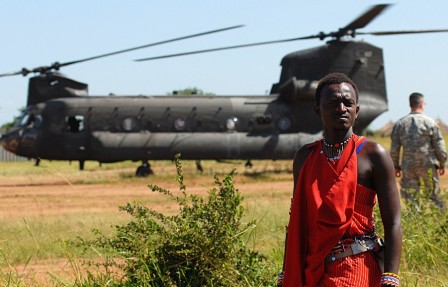
A few people are aware of the existence of AFRICOM, at least not in the United States. AFRICOM stand for US Africa Command, and it is part of the foreign policy legacy of George W. Bush. The Neocon ideology of global US empire, prevalent during the Bush-era, was at play for the creation of AFRICOM. But AFRICOM is still going strong today, illustrating that the same “philosophy” is still prevalent under the Obama administration.

AFRICOM Official Mission

On February 6, 2007 George W. Bush and Secretary of Defense Robert Gates announced the creation of US Africa Command. According to the Department of Defense, the decision to create AFRICOM was “the culmination of a 10-year thought process within the DOD acknowledging the emerging strategic importance of Africa, and recognizing that peace and stability on the continent impact not only Africans, but the interests of the US and the international community as well.”

The statement above, from AFRICOM’s web site, clearly reflects a corner stone of the Neo-con ideology advocating an expansion of the American empire on the pretense of  promoting peace and stability. AFRICOM, under the Obama administration, is still trying to paint itself almost as a humanitarian organization.
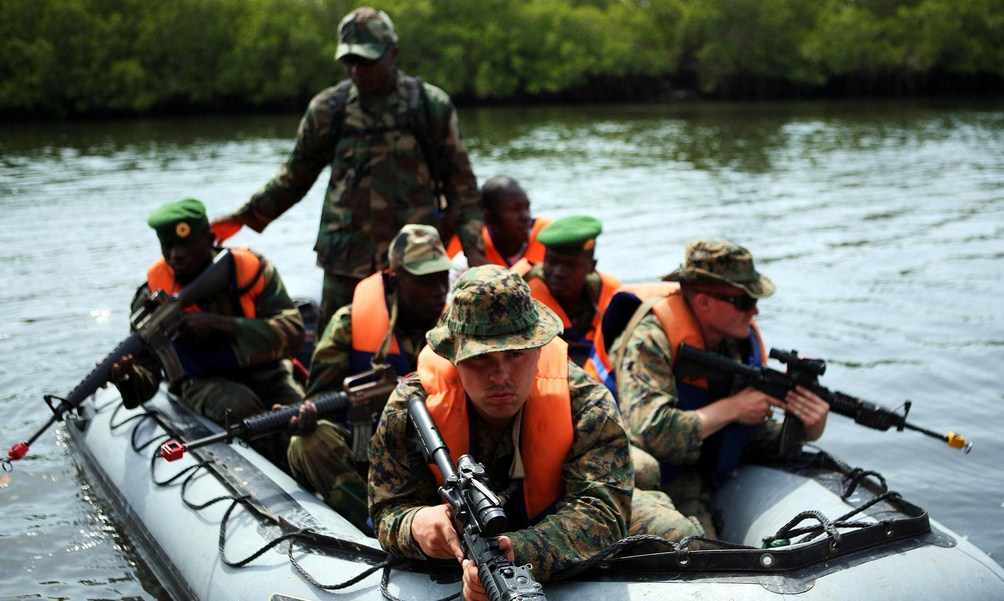
“The designer of US Africa Command clearly understood the relationship between security, development, diplomacy and prosperity in Africa. As a result, AFRICOM reflects a much more integrated staff structure, one that includes significant management and staff representation of the State Department, USAID, and other government agencies involved in Africa.”

In May 2008, Robert Gates approved the following mission statement for AFRICOM:

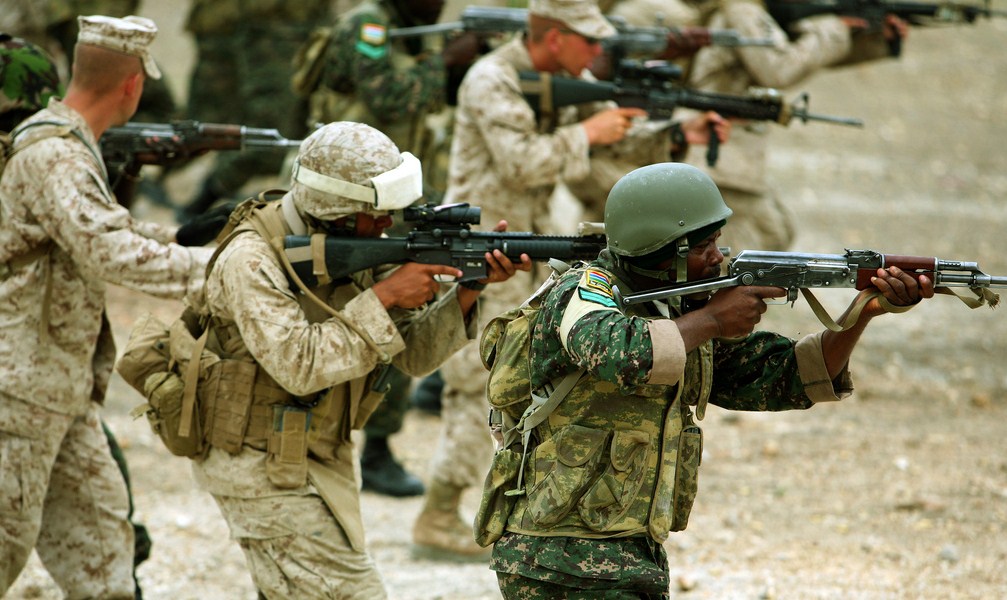
“US Africa Command, in concert with other US government agencies and international partners conducts sustained security engagements through military-to-military programs, military sponsored activities, and other military operations as directed to promote a stable and secure African environment in support of US foreign policy.”
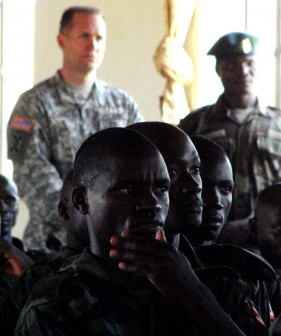

What Is The US Military Really Doing In Africa?

The last part of  AFRICOM’s mission statement (approved by Secretary of Defense Gates) gives us an exact clue of the real mission of AFRICOM: Promoting “peace and stability” for Africans is a pretext to justify the real mission, which is to defend US interests on the African continent, and further advance America’s global foreign policy goals.

With the creation of AFRICOM, the Pentagon attempted to increase access to Africa’s oil and other valuable mineral resources, and to open a new front on the so called “global war on terror”, without much regard for the needs and desires of African people. AFRICOM is nothing less than the latest frontier in the US global military expansionism.

The three main real goals of AFRICOM are quite obvious: 1- To counter terrorism on African soil as part of the global war on terror, 2- To protect oil resources, recognizing that the US currently purchases 24 percent of its oil from Africa, 3- To counter China’s growing influence in Africa.

Africans are expressing grave concerns over the political and economic interests behind a US military presence on the continent. An African action resource provides many examples of statements from African leaders who stand opposed to AFRICOM.

Editor’s Note: Please follow The News Junkie Post on Twitter to stay updated on all of our articles.

Share

Related Articles

6 Comments for “AFRICOM: The US Military’s Growing Role In Africa”

  1. Social comments and analytics for this post…

    This post was mentioned on Twitter by NewsJunkiePost: #AFRICOM: The US Military Growing Role In #Africa http://goo.gl/fb/UWTe #njp #feature #headlines #worldnews…

  2. Gilbert, you nailed it with this article…. The US’s “Grand Area” policy, indeed, tragically continues onward:

    http://www.escholarship.org/editions/view?docId=ft4489n8wm&chunk.id=d0e734&toc.depth=1&toc.id=d0e170&brand=eschol

  3. Mr. Mercier,

    I’m not certain you’ve made a convincing case that African stability is not in the national interest of the United States.

    You should take a few minutes to read the “commander’s intent” of my boss, General Kip Ward. He says, “our national interests lie in a stable continent of Africa. This means that Africans live in the relative peace of a
    stable environment, are governed effectively, and enjoy a degree of economic and social advancement. An Africa, whereby African populations are able to provide for themselves, contribute to global economic development and allow access to markets in free, fair, and competitive ways, is good for America and the world. President Barack Obama stated in Accra, Ghana in July 2009, that ‘Africa’s future isup to Africans,’ and specified five priority areas where the U.S. can contribute to a brighter future for Africa. They are: democracy, opportunity, health, the peaceful
    resolution of conflict, and addressing transnational challenges.”

    You can read the rest at our Website: http://www.africom.mil

    Respectfully,
    Vince Crawley
    U.S. Africa Comand Public Affairs

    • +2 Vote -1 Vote +1Gilbert Mercier
      Gilbert Mercier

      Dear Vince,

      Thank you for your comment. I did read the letter from your commander General Ward. The criticisms of AFRICOM’s role in Africa , as I am sure you are aware of, are coming from many sources within Africa. Both from elected officials and the media.

      While I am not putting in question the dedication and integrity of the men and women serving in AFRICOM, what can be contested is the validity of the overall policy.

      We should keep in mind that most of Sub-Saharan Africa is celebrating its 50-years independence anniversary from the colonial powers of France in West-Africa and Britain in East-Africa. Don’t you think the African people have the right to be a bit sensitive about colonial or neo-colonial power?

    • Of course African “stability” is in “the national interest” of the US. There are raw materials to be had and strategic US military positions to be established in those African countries…. But that’s a limited way of looking at the larger issue.

      The larger question, rather, is this: Is the sort of “stability” the US wants to establish in the “interests” of the African people, themselves?… And by “the people”, here, we shouldn’t mean African politicians who serve the “interests” of the World Bank, et al, which force structural adjustment loans onto “third world” African countries–loans which make anything like an autonomous democratic process impossible in these countries…. If the US was genuinely interested in “spreading democracy” and “freedom”–in the diplomatic, self-determining sense–AFRICOM would be used a bit differently than it is now, via the demands of the global market and the US State Department.

      I do echo Gilbert Mercier’s assertion, that, “While I am not putting in question the dedication and integrity of the men and women serving in AFRICOM, what can be contested is the validity of the overall policy.”

      And the “overall policy”, as I understand it, extends back many decades and is documented rather well here:

      http://www.escholarship.org/editions/view?docId=ft4489n8wm&chunk.id=d0e734&toc.depth=1&toc.id=d0e170&brand=eschol

      Aditionally, both economists Joseph Stiglitz and Susan George, as well as historian David Harvey, have also addressed the problems of the structural adjustment loans which cripple the very countries the US claims it wants to “stabilize”. These matters direly need to be rethought, in order to foster global stability, in the genuine sense. And I see no reason, given the documentation available, to disagree on this point. The looming question for us, then, is: How do we transition to a less predatory form of global relations, which will result in the “stability” we all want?

  4. Here’s a link to War’d “Commander’s Intent” letter for 2010. It’s a PDF file.

    http://www.africom.mil/pdfFiles/Commander's%20Intent%20January%202010.pdf

Comments are closed

The NJP Editorial Staff

Your Ad Here

LATEST STORIES

Your Ad Here