
Pakistan: Supreme Court Pushes To Reopen Zardari’s Corruption Case

NEWS JUNKIE POST
Mar 31, 2010 at 10:54 am
Pakistani anti-corruption officials have asked Switzerland to reopen a corruption case against their own President, Asif Ali Zardari. Zardari and his late wife, Benazir Bhutto, were convicted in Geneva for laundering 13 million dollars which they allegedly received in bribes in 2003. The verdict was thrown out after an appeal, but Pakistan Chief Justice Chaudhry wants the case reopen and thinks that Zardari should not enjoy his immunity status as Pakistan current president.
Another 158 corruption cases have been reactivated after Pakistan Supreme Court’s decision last year to dismiss the National Reconciliation Order (NRO) as unconstitutional. The NRO, an executive order, was brought in by former president Musharraf in 2007, when he was under US pressure to hold elections and quit his post. In the view of many Pakistanis, the real goal of the National Reconciliation Order was to make a political come back possible for Benazir Bhutto.
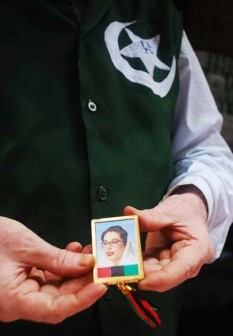
“The background is that the United States, together with President Musharraf, had a deal to bring back Benazir Bhutto, and Benazir pleaded that there should be a reconciliation process- that is why the National Reconciliation Order came about- so all the cases against her were squashed and she would be free to come back, take part in politics and maybe become prime minister,” commented Mariana Baber in the Pakistani daily The News.

The Pakistani Supreme Court, headed by Chief Justice Muhammad Chaudhry, is ordering the chairman of the National Accountability Bureau, Naveed Ahsen, to implement the court’s verdict on the National Reconciliation Order by today.
“It was indeed a day of reckoning for many of the mightiest of the land. The first victim of an enraged Supreme Court, angry because its National Reconciliation Order judgment was not being implemented, went to jail on Tuesday and a 24-hour ultimatum was given to others to implement the court verdict, including writing the letter for reopening the Swiss cases against President Zardari,” wrote Sohail Khan in the Pakistani daily The News today.
President Zardari has already served 8 years in jail for corruption, but Zardari, however, has immunity from prosecution while president. But some analysts think that Chief Justice Chaudhry may try to scrap the presidential immunity by invoking Islamic precedents.
Chaudhry, in one of his previous ruling, has said that the Supreme Court does not agree that the president has immunity from wrongdoings while in office. Chaudhry refers to Islamic laws when even the Prophets, the Prophets of Islam, were “dragged to court and had to answer before the judges”.
Editor’s Note: Please follow Gilbert Mercier on Twitter, and The News Junkie Post to stay updated on all of our articles.
Related Articles









2 Responses to Pakistan: Supreme Court Pushes To Reopen Zardari’s Corruption Case
You must be logged in to post a comment Login