War On Poverty:The Only War Worth Fighting For


Almost 46 years ago, on January 8 1964, President Lyndon Johnson declared a “war on poverty” in his first State of The Union speech. Making poverty a national priority set in motion a series of bills and acts such as head start, food stamps, Medicare & Medicaid. The programs initiated by Lyndon Johnson, which still constitute the backbone of what is left of America’s social safety net, brought about real results, reducing rate of poverty and improved living standards for America’s poor.
However, the poverty rate has remained steady since the late 1970′s, and kept increasing as a consequence of “Reaganomic”, which can be described as the systematic de-regulation of Wall Street and cuts on social programs. Ronald Reagan’s policies were more or less carried on by Bush Senior, Bill Clinton and Bush Junior with catastrophic consequences for America’s poor.
Ronald Reagan and others on the political right convinced many that the war on poverty represented a failure of big government. According to conservative America, instead of helping to alleviate poverty the programs supposedly “encouraged sloth, dependency, crime, single parenthood and unproductive citizens”.
In Lyndon Johnson’s State of the Union speech, he declared an “unconditional war on poverty in America”, and promised “not to rest until the war is won”. His audience thundered in ovation. In absolute contrast, almost a quarter century later in Ronald Reagan’s 1988 final State of the Union speech, the teflon President announced cynically that in “America’s war on poverty, poverty won”. His audience rumbled idiotically with laughter, not realizing that the economic and social policies they supported had failed America’s poor and middle-class.
The economic and financial crash of last year would prevent people such as Ronald Reagan to be as arrogant and mean spirited today as he was in 1988, at least not in public. Regardless, today more than ever, poverty and its extreme form homelessness, is the true scandal of American society.
Currently, the top 1 percent of the United States population, in terms of income and assets, control 45 percent of the total financial wealth. On the other hand, the bottom 80 percent control a meager 7 percent. To make an historical comparison, such disparity of wealth and social inequalities were also prevalent in France and Russia before the French Revolution in 1789 and the Russian Revolution in 1917. This slippery slope of an extreme gap between the “haves” and the “have-nots” is not sustainable in the long term.
With thanksgiving right around the corner, there is no better time to remember that countless people are in needs of the most basic necessities or even homeless. For them, the so called American dream has become a nightmare.
Not to worry, the 1 percent American elite is doing fine, Wall Street has almost fully recovered from the crash, and as matter of fact, a firm like Goldman Sachs will pay its top executives 21 billion in obscene bonuses. On the other hand, for Main Street it is joblessness, foreclosures and sometime even collecting cans and glass from garbage cans for recycling cash. The American middle class dream of the white-picked-fence home is in shamble, the middle class is getting poorer and more poor are becoming homeless in this dreadful race to the bottom.
Lyndon Johnson had the right idea, unfortunately, and judging by his first year in office, it doesn’t seem that President Obama has neither the will nor even the intention to carry on with the battle started by Lyndon Johnson. From all the fake and conceptual wars such as the “war on terror” or the “war on drugs”, and the real wars such as the one in Iraq and Afghanistan; the only one worth fighting for was Johnson’s war on poverty. When Reagan got elected, he made sure that the war on poverty would be lost.
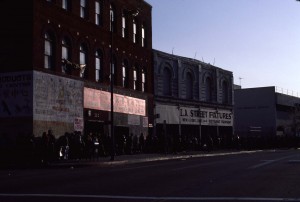
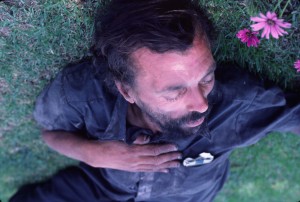
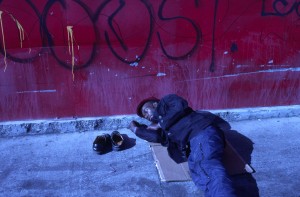
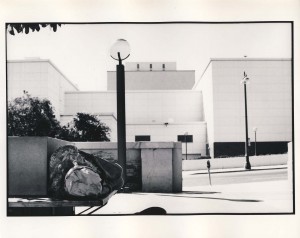
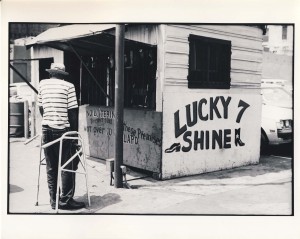
The photographs on top of this article were taken between 1984 and 2008. All photographs by Gilbert Mercier. All rights reserved for all media.

4Ps Business and Marketing Magazine – A Plan Media Publication, New Delhi, India.
Special Feature
COLUMN CITIZENRY
A prescription to end corruption
Unique identification of every citizen will help kill the corruption malaise in developing economies
Kris Dev,
ICT & e-Gov Consultant, Manthan Awardee for e-Inclusion & Livelihood Creation
What ails the under developed and developing nations? Reply: corruption leading to self perpetuating poverty. Reason: lack of honesty & transparency. Result: lack of accountability for sustained growth. Economy is divided between rich & poor; the rich are growing richer and the poor are growing poorer. The poor cannot afford essentials such as food, clothing, shelter, health, education and social security. The division is so sharp between communities, while a rich family can afford to spend Euro500 per week on food items, a poor family of the same size can hardly spend Euro5 per week.
Does this mean all citizens living in a poor nation are poor? Well the answer is a ‘NO’. The wealth in a under developed/developing nation is skewed. Almost 80-90% of the wealth of the nation is in the control of say 5-10% of the population. The majority of the population hardly has access to any wealth and live in abject poverty.
One of the biggest factors is ‘Corruption.’ It is the cancer eating into the vitals of the society. It has permeated into all facets of life, affecting the poor and voiceless. Today, the common man with no money or muscle power, cannot think of getting any thing done in the developing world, without having to pay bribe.
Global institutions such as World Bank, IMF, and UN must enjoy legitimacy from their member countries and the international community. They must be responsive, with the interests of all members, especially the smaller and poorer, being taken into account. The governance of these institutions must be flexible, must respond to new challenges, national priorities and specific circumstances.
A scathing report from the Independent Evaluation Office (IEO) of IMF highlights the lack of transparency and accountability in IMF. The IEO measured governance along four dimensions – effectiveness, efficiency, accountability and voice – and against three standards – the Fund’s own governing documents, other international organisations, and private & public-sector corporations. The report finds accountability and voice are the weakest features of the Fund’s governance and these weaknesses entail risks to the Fund’s legitimacy, which in turn has a bearing on its effectiveness.
If this is the situation with global institutions, we can well imagine what would be the situation with national and regional institutions. No wonder they abound in corruption of all sorts and get away with it. Then, how do we get over this corruption mania? One sure way would be to plug all the leakages in the system. This cannot be done without active support of the governments and its citizens. A unique identification of every citizen is the primary requirement. With the advent of ICT tools, every citizen can be uniquely identified from birth to death using unique identification methods such as fingerprint, iris, hand vein geometry and DNA linked to their ID, name, photo, etc.
A Multi Purpose Biometric Smart Card for every individual and organisation linked to a money account and a e-Tool to link every citizen and service provider/public authority including the vertical and horizontal hierarchy of governance can be used as a single window of transactions for G2C, G2G, B2B, B2C, etc. If the transactions are thrown open, then total transparency and accountability can prevail, as envisaged in the Right to Information Act.
Healthy citizenry can be created by covering all aspects of citizens from birth to death such as health, hygiene, housing, education, employment, expenses, consumption, savings, social security, et al, based on genuine physical transactions and not ghost transactions. Thus corruption, money laundering, arms trade and terrorism can be eliminated and all round peace and prosperity can prevail as every one would feel good that no one can cheat any one and all have equitable opportunities to contribute and grow.
http://www.4psbusinessandmarketing.com/17072008/storyd.asp?sid=2112&pageno=1
Thanks for your comment and great work, please check out an article that I wrote about the new report on international corruption by Transparency International. You will find it easily on News Junkie Post.